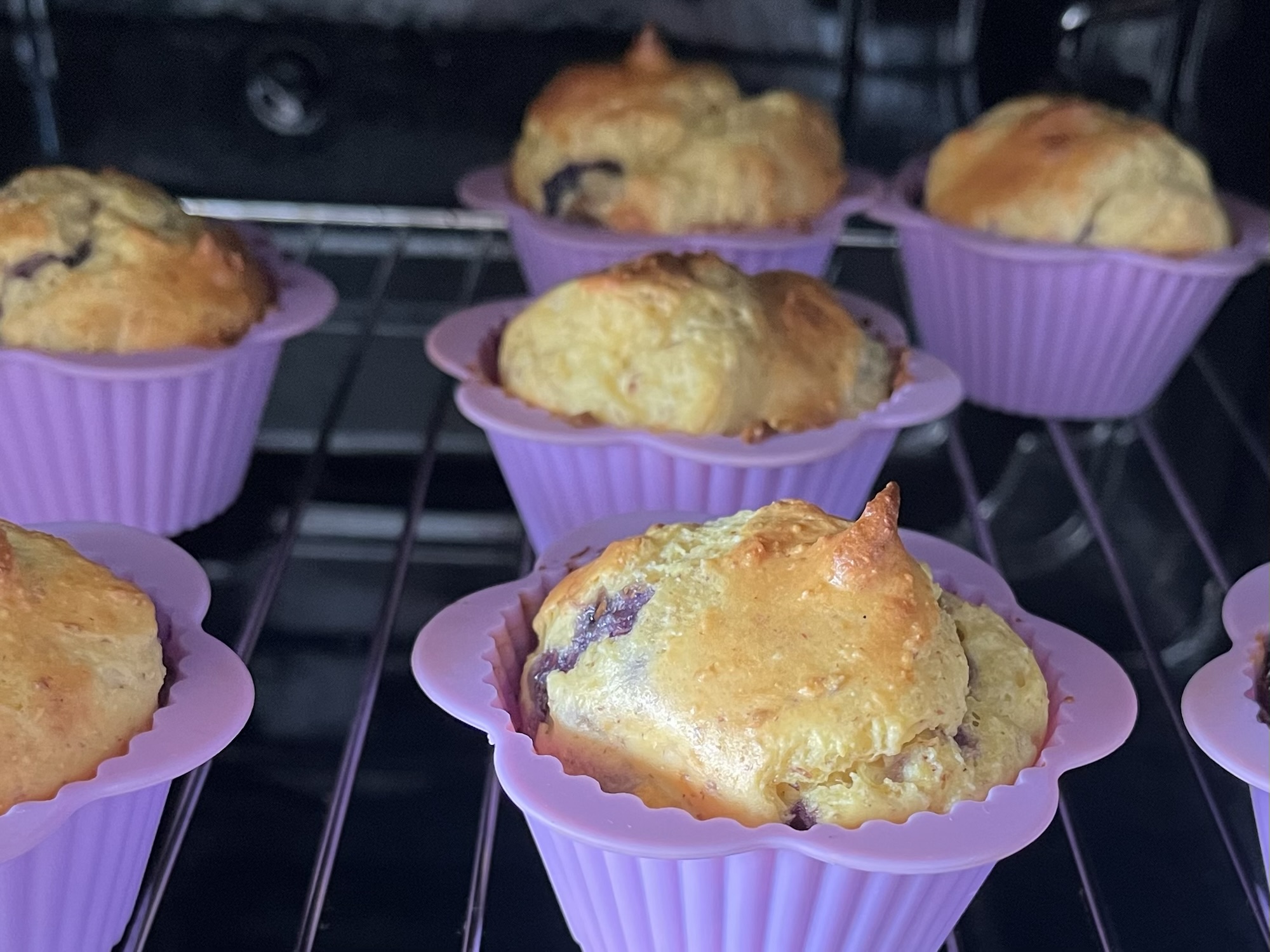
I used to think meal prep meant spending an entire Sunday afternoon cooking enough food to feed a small army.
Multiple recipes. Endless chopping. Containers covering every surface of the kitchen.
And honestly? That version of meal prep never appealed to me.
But over time, I’ve realized that meal prep can look very different.
For me, it’s simply about doing a little more when I already have my kitchen out so that the rest of the week feels easier.
Sometimes that means preparing several dinners ahead. Sometimes it means washing and cutting fruit, making a batch of muffins, freezing pancakes for breakfast, or preparing something that I know will save me twenty minutes on a busy evening.
It doesn’t have to be complicated.
And it has become one of the little systems that helps me stay sane at home.
Why I Meal Prep
There is something about knowing that part of dinner is already taken care of that makes a busy day feel completely different.
When the afternoon gets away from me, someone needs help with homework, the children are hungry, and I haven’t even thought about dinner yet, I don’t want to stand in front of the refrigerator trying to figure out what to make.
I want options.
Meal prep gives me those options.
It also helps me make better use of the food we already have. Instead of buying ingredients with good intentions and then discovering them at the back of the refrigerator a week later, I can prepare them while they’re fresh and freeze what we won’t use right away.
And perhaps my favorite part is that meal prep reduces decisions.
I don’t need to decide from scratch what we’re having every evening.
I don’t need to start every meal at zero.
There is usually something in the freezer, refrigerator, or pantry that gives me a head start.
That little bit of preparation creates a lot more breathing room.
Meal Prep Doesn’t Have to Mean Prepping an Entire Week
I think this is important because “meal prep” can sound much more intimidating than it needs to be.
You don’t have to prepare seven complete dinners every Sunday.
You can meal prep for three days.
Or five.
Or two weeks.
You can prepare individual ingredients rather than complete meals.
You can double a recipe and freeze half.
You can make a big batch of something your family already loves.
You can simply prepare breakfast ahead so that your mornings are easier.
There isn’t one right way to do it.
I usually look at the week ahead and ask myself:
What can I do now that will make the next few days easier?
That’s it.
Sometimes the answer is a freezer meal. Sometimes it’s chopped vegetables. Sometimes it’s a batch of homemade snacks.
The goal isn’t to spend more time in the kitchen.
The goal is to make the time I do spend in the kitchen work a little harder for me.
The Meal Prep Tools I Actually Use
Over time, I’ve added a few things to my kitchen that make meal prep easier.
But I want to make one thing clear:
You do not need a kitchen full of specialty gadgets to start meal prepping.
I simply added the basics that I knew I would actually use.
If you’re starting from scratch, I would do the same.
Choose a few good-quality, versatile pieces and let them earn their place in your kitchen.
Glass Food Storage Containers
This is probably the first thing I would recommend.
I prefer glass containers because they feel beautiful and substantial, they’re easy to clean, and they work well for storing prepared meals and leftovers in the refrigerator.
I like having a few different sizes so that I can store everything from individual portions to an entire family meal.
Look for containers that stack well and can safely go from refrigerator to oven or microwave according to the manufacturer’s instructions.
You don’t need dozens.
A small collection of good containers is enough to get started.
Freezer Bags
Freezer bags are one of those simple things I reach for constantly.
They’re perfect for foods that don’t necessarily need a container, such as fruit, vegetables, bread, pancakes, waffles, or prepared ingredients.
I also keep smaller Ziploc bags for snacks and little portions.
The key is to use actual freezer bags for freezing and to remove as much excess air as practical before sealing.
Freezer Paper
Freezer paper is particularly useful when I’m wrapping foods individually before placing them into a freezer bag or container.
It adds another layer of protection and makes it easy to separate portions.
It’s one of those very basic supplies that doesn’t look particularly exciting—but you’ll appreciate having it when you’re preparing food in batches.
Parchment Paper and Cookie Sheets
These two work together beautifully for freezer prep.
I can place things like meatballs, cookies, pancakes, waffles, or other individual portions on a parchment-lined cookie sheet and freeze them separately first.
Once they’re frozen, I can transfer them into a freezer bag or container.
This prevents everything from freezing together into one giant block.
It also makes it much easier to take out exactly what I need.
Ice Cube Trays
An ice cube tray isn’t only for ice.
I use mine for freezing small amounts of things such as sauces, broth, pesto, tomato paste, or other ingredients that I may only need a little of at a time.
It’s a very inexpensive way to create small portions.
Larger Silicone Freezer Trays
If an ice cube tray is useful for small portions, silicone freezer trays take that idea a little further.
They’re wonderful for freezing individual servings of soup, sauces, broth, cooked vegetables, or other foods that you want to portion before freezing.
And because they’re flexible, the frozen portions are usually easy to remove.
An Ice Cream Scoop
This might sound like an unusual meal-prep essential, but I love having one.
A scoop makes it much easier to portion cookie dough, meatballs, muffins, energy bites, or similar foods into roughly equal portions.
It’s one of those inexpensive tools that can quietly make batch cooking much easier.
A Digital Kitchen Scale
A kitchen scale is especially helpful when you’re making large batches and want your portions to be consistent.
It’s useful for baking, dividing dough, portioning meat, and simply making sure that one freezer portion isn’t twice the size of another.
You certainly don’t need to weigh everything.
But when you need it, it’s incredibly useful.
Large Mixing Bowls
When you’re cooking more than one batch of something, a generous mixing bowl makes a surprising difference.
I use larger bowls for preparing cookie dough, meatballs, pancake batter, salads, chopped ingredients, and all sorts of family-sized recipes.
There is something very satisfying about having enough space to actually mix everything without worrying about spilling it over the sides.
A Large Stockpot or Dutch Oven
If you’re going to make soups, chili, stews, curries, pasta sauce, or other freezer-friendly meals, a large pot is one of the most useful things you can own.
Make a little more than you need.
Enjoy some tonight.
Freeze the rest.
That simple habit can turn one cooking session into two or three much easier meals.
A Muffin Tin
A muffin tin is another surprisingly versatile meal-prep tool.
You can use it for muffins, egg bites, mini portions, baked oatmeal, meatloaf portions, or other foods that you want to make in individual servings.
It’s also an excellent way to freeze small portions without needing another specialized gadget.
A Food Processor
A food processor isn’t essential for everyone, but if you regularly prepare vegetables, sauces, pesto, dips, shredded ingredients, or homemade snacks, it can save a considerable amount of time.
I think of this as a nice-to-have, rather than something you need before you begin.
Start with the basics.
Add something like this when you know you’ll actually use it.
A Bench Scraper
A bench scraper is another small tool that earns its place.
It’s useful for dividing dough, moving chopped ingredients from the cutting board, and making baking and batch cooking a little tidier.
It’s inexpensive, takes up almost no space, and is one of those tools you may find yourself reaching for more often than expected.
Freezer Labels and a Marker
This is one of the least glamorous things on the list and one of the most useful.
Label what you’ve made and when you made it.
It sounds obvious, but a freezer full of mystery containers isn’t particularly helpful.
A simple label means I can open the freezer and immediately know what I have.
No guessing.
No opening five containers to find the soup.
No wondering whether something has been in there for three months or three years.
A Freezer Thermometer
I also keep a freezer thermometer because I want to know that my freezer is actually maintaining a safe temperature.
It’s a very simple little tool, but it gives me peace of mind—especially when I have taken the time to prepare and freeze a lot of food.
Freezer Bins and Organizers
This is where meal prep starts becoming much more enjoyable.
I like using freezer bins to group smaller items together so that they don’t disappear underneath everything else.
For example, I can keep little bags of frozen fruit together in one compartment instead of having them scattered throughout the freezer.
The same idea works for snacks, vegetables, breakfast items, or smaller freezer portions.
The goal isn’t to create a picture-perfect freezer.
It’s simply to make it easy to see what you have and reach what you need.
A Two-Tier Egg Tray
And finally, something I added for the refrigerator rather than the freezer: a two-tier egg tray.
It’s a small organizational upgrade, but I love anything that uses vertical space well.
Keeping eggs organized and easy to see means one less thing taking up unnecessary room in the refrigerator.
Start With the Basics
If you look at this list and think, That’s a lot of things to buy, please don’t.
You don’t need to go out and purchase everything before you can meal prep.
In fact, I wouldn’t recommend that.
I simply added the basics to my kitchen, and I would suggest you do the same.
Start with the things that solve an actual problem in your kitchen.
If you want to freeze meals, get a few good glass containers and freezer bags.
If you bake in batches, parchment paper and a cookie sheet will go a long way.
If you freeze lots of small portions, an ice cube tray or silicone freezer tray may be useful.
If your freezer tends to become chaotic, add a couple of freezer bins.
If you find yourself making large batches regularly, then a large mixing bowl or stockpot becomes worthwhile.
You don’t need to buy a special gadget for every possible meal-prep task.
The best tools are the ones you will use again and again.
Meal Prep Is Really About Making Tomorrow Easier
That’s why I like meal prep so much.
It’s not about being incredibly organized.
It’s not about cooking everything perfectly on Sunday.
And it’s certainly not about adding another obligation to an already full list.
For me, meal prep is simply a way of giving my future self a little help.
When I prepare something today, I’m making tomorrow’s dinner easier.
When I freeze extra portions, I’m making a busy evening easier.
When I organize the freezer, I’m making the next grocery trip easier.
And when I have a few simple meals and ingredients ready to go, I have fewer decisions to make when everyone is hungry.
That, to me, is the real beauty of meal prep.
It doesn’t have to make your life more complicated in order to make your life easier.
Start small.
Prepare something your family already loves.
Double a recipe.
Freeze the extra.
Add a few simple tools as you go.
And let meal prep become one more quiet little system that helps your home run a little more peacefully.
Shop My Meal Prep Essentials
I’ve put together a collection of my favorite meal-prep and freezer-organization essentials on LTK, so you can easily find the products I use and the simple tools I recommend for making meal prep a little easier at home.

