There are days when motherhood feels like one long list of things that need to be done.
Meals. Laundry. Schoolwork. Dishes. Someone needs help finding a shoe. Someone else is hungry again. And somehow the day is already moving toward bedtime.
On days like that, it can be tempting to think of reading as one more thing we should be doing.
Another habit to add. Another educational goal to keep up with. Another box to check.
But what if we looked at reading differently?
What if reading with our children wasn’t another thing to accomplish—but one of the simple things that actually helps make family life feel a little calmer?
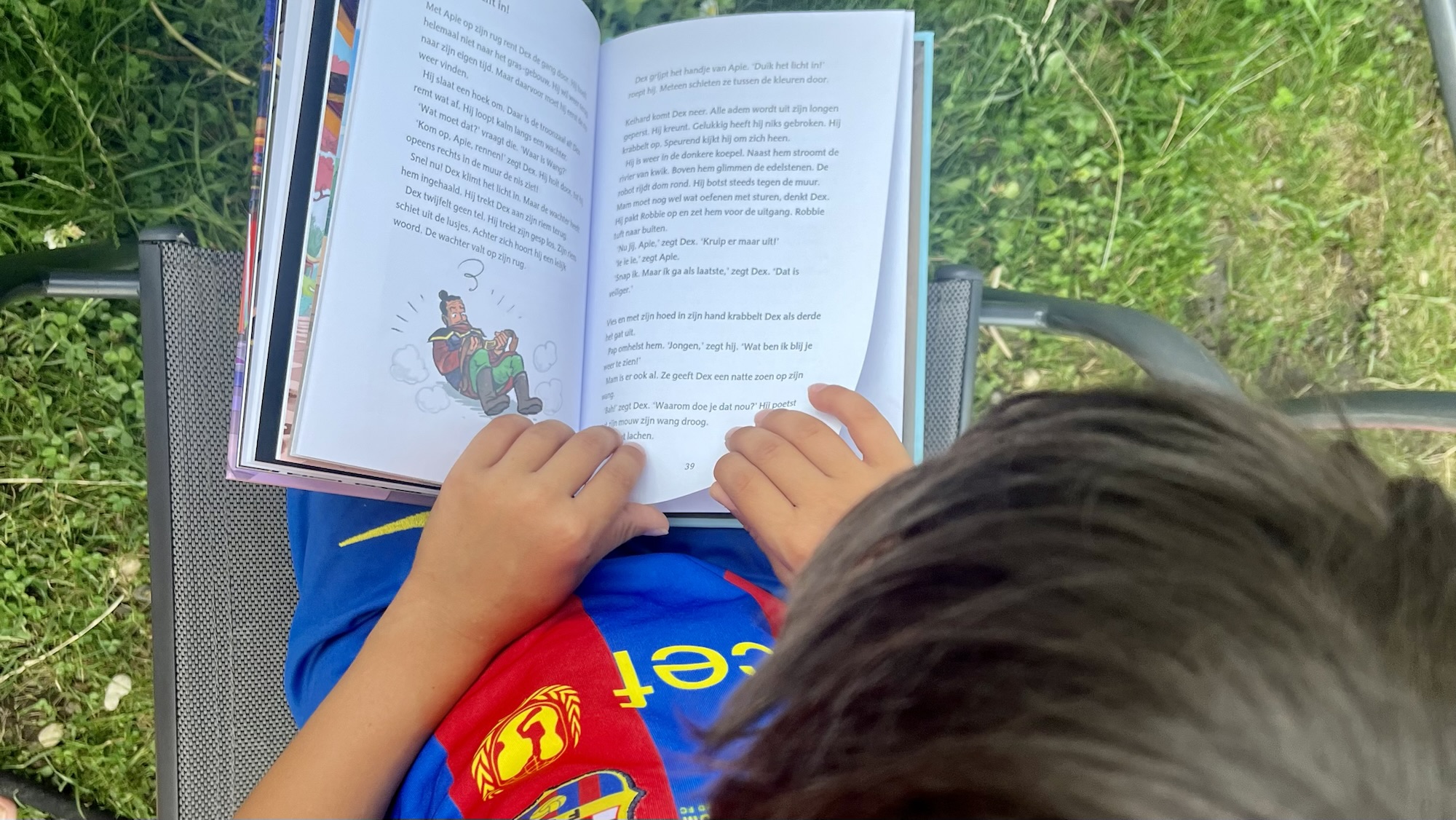
A few books on the couch. A child tucked beside you. Ten quiet minutes before bed. A funny story everyone knows by heart. A chapter read aloud while the little ones build something nearby.
These moments may look small, but they can become some of the sweetest rhythms in family life.
And there is good reason to make space for them.
Reading Is About So Much More Than Learning to Read
When we think about children’s reading, it’s easy to focus on the end goal: I want my child to learn to read.
Of course, that’s important.
But long before a child is confidently sounding out words on their own, they are learning what books are, how stories work, how language sounds, how conversations flow, and how enjoyable it can be to sit down with a good story.
The American Academy of Pediatrics recommends shared reading beginning in infancy and continuing through at least kindergarten. Their 2024 policy statement describes reading together as a positive parenting practice that supports children’s language and literacy development while also strengthening relationships and social-emotional development. (American Academy of Pediatrics)
In other words, reading with your kids isn’t only preparing them to read. It’s helping create the kind of home in which reading, learning, conversation, and connection naturally belong.
And I think that’s something worth remembering when we’re tempted to make reading feel like a lesson.
Sometimes the most valuable thing we can do is simply open the book.
Reading Can Become a Calming Family Rhythm
One of my favorite things about reading is that it naturally slows us down.
You don’t need a complicated system.
You don’t need a beautifully organized homeschool room.
You don’t even need a completely quiet house.
You just need a book and a little bit of time.
Reading can happen after breakfast. Before nap time. While you’re waiting for dinner to finish. During a quiet afternoon. At bedtime. On a rainy Saturday when everyone is getting a little tired of being inside.
Over time, these small moments can become familiar family rhythms.
And rhythms matter.
The AAP specifically includes reading together as part of its recommended early childhood routines, noting that shared reading can offer comforting routines and a sense of security for both children and parents. (American Academy of Pediatrics)
That doesn’t mean every family needs a strict daily reading schedule.
Quite the opposite.
A peaceful reading routine might simply mean:
We read after lunch.
We always have a few books beside the couch.
We read a chapter before bed.
We bring books with us when we know we’ll be waiting somewhere.
Simple enough to actually happen.
You Don’t Have to Turn Reading Into School
This is especially important if you have a child who is learning to read.
It can be so easy to become focused on progress.
Did they remember that sound?
Are they reading enough words?
Why are they still struggling with this letter?
Should we be doing more?
Sometimes, without meaning to, reading becomes another place where both Mom and child feel pressure.
But children also need to experience books as something joyful.
There is a time for phonics practice and learning letter sounds. There is a time for helping your child sound out a word and celebrate when they figure it out.
And there is also a time to simply read the story to them.
You can have both.
Your child can practice reading independently while you continue reading beautiful, funny, interesting, challenging books aloud.
They don’t need to be able to read every word in a book to enjoy the story.
And they don’t need to be working on their reading skills every time a book is opened.
Sometimes we can just be together.
Reading Aloud Still Matters When Your Child Can Read
Once children begin reading independently, it’s tempting to think our job is finished.
But please don’t put away the read-aloud books just yet.
Reading aloud gives children access to stories and vocabulary that may still be beyond what they can comfortably read on their own.
It also gives you something precious that becomes increasingly difficult to find as children get older:
a shared story.
You laugh at the same character.
You wonder what will happen next.
You talk about something surprising.
You recognize a favorite line.
And suddenly you’re not just teaching reading.
You’re making memories.
The AAP notes that reading aloud exposes children to richer vocabulary and more complex language while creating opportunities for conversation and nurturing relationships. (American Academy of Pediatrics)
So even when your child can read a book independently, there is still something beautiful about saying,
“Come sit with me. Let’s read this one together.”
Reading Can Give Mom a Breather, Too
Here’s the part I don’t want us to overlook.
Reading isn’t only good for our children. It can be good for Mom.
Motherhood can be incredibly noisy.
There are constant questions, interruptions, decisions, messes, and little voices calling your name.
And while I love the beautiful chaos of family life, I also think mothers need moments when the pace changes.
Reading can create one.
You sit down.
You put your phone away.
Your child climbs beside you.
For a few minutes, there is only the story.
The AAP’s review connects shared reading with comforting routines, nurturing relationships, reduced parenting stress, and improved parent coping. (American Academy of Pediatrics)
I love that because it reminds us that a peaceful family life isn’t necessarily created by doing less parenting.
Sometimes it’s created by choosing a few simple things that bring us back to each other.
Reading can be one of those things.
You Don’t Need a Huge Home Library
You also don’t need hundreds of children’s books.
In fact, I think there is something lovely about having a smaller collection of books that your children genuinely love.
A few favorites on the bookshelf.
A basket beside the couch.
A stack of library books on the coffee table.
A handful of seasonal books that come out each year.
And every once in a while, a few fresh books that make everyone excited to read again.
Because let’s be honest: sometimes the children have heard the same bedtime story so many times that Mom is ready for a new one.
And that’s okay.
New books can bring fresh energy to a reading routine without requiring you to reinvent your entire family schedule.
A little bookshelf refresh can go a long way.
And sometimes, creating a reading rhythm starts with simply having good books within reach. If your children’s bookshelf has started to feel a little… well-loved, this might be the perfect time to add a few fresh stories to your collection. I put together some of our favorite children’s books and family reading picks on LTK so you can easily find new books for your next library basket, bedtime stack, or quiet afternoon together. A few beautiful new books can make reading feel exciting again—and you don’t need a huge collection to create a home where children love to read.
Ready to refresh your family’s bookshelf? Take a look at my LTK book collection and choose a few new stories your kids will be excited to open. Sometimes a fresh stack of books is all it takes to bring a little more reading, connection, and calm into the week.
Make Books Easy to Reach
One of the simplest ways to encourage more reading at home is to make books visible and accessible.
You don’t need a dedicated reading room.
Try keeping books:
- In a basket beside the sofa
- On a low bookshelf your children can reach
- Beside their beds
- In a cozy reading corner
- In the car
- In a basket you bring outside on nice days
- In a small stack on the kitchen table
When books are easy to reach, reading doesn’t have to become a production.
A child can pick up a book while waiting for lunch.
They can bring one to you while you’re folding laundry.
They can look through a picture book while their sibling finishes something else.
Those little moments count.
Let Your Children See You Reading, Too
If we want our children to believe that reading is something people enjoy, one of the simplest things we can do is let them see us enjoying books.
Read your own book while they read theirs.
Keep a book on your nightstand.
Visit the library together.
Talk about a story you loved.
Let your children see you choose a book instead of reaching for your phone every once in a while.
It doesn’t need to be intentional every time.
You’re simply showing them:
Books are part of our family life.
And that message can be powerful.
What If Your Child Doesn’t Want to Read?
Don’t panic.
And please don’t assume that one season of resistance means your child isn’t going to become a reader.
Try changing the book.
Try reading aloud instead of asking them to read.
Let them choose something silly.
Try nonfiction.
Graphic novels.
Poetry.
A book about animals.
A cookbook.
A book about something they’re currently obsessed with.
Let them listen while they draw.
Read in the car.
Read outside.
Take a trip to the library and let them choose something you would never have picked.
The goal isn’t to create the perfect little reader overnight.
The goal is to help your child discover that books have something to offer them.
You Don’t Have to Read for an Hour Every Day
If you take nothing else from this post, take this:
You don’t need a complicated reading routine.
Ten minutes counts.
One chapter counts.
A picture book before bed counts.
Reading the same favorite story for the 47th time counts.
Listening to your child read a few pages counts.
Reading aloud while everyone eats breakfast counts.
A Saturday afternoon spent curled up with books counts.
The AAP emphasizes shared reading as a joyful part of everyday family routines rather than presenting it as a complicated academic program. (American Academy of Pediatrics)
So if you’ve been feeling guilty because your family isn’t reading for some idealized amount of time every day, take a breath.
Start small.
Small and consistent is far more peaceful than ambitious and unsustainable.
Create a Home Where Reading Belongs
I don’t think we need to make our homes look like classrooms to raise children who love learning.
We can simply create homes where books are part of everyday life.
Where stories are read at bedtime.
Where library books sit on the coffee table.
Where Mom occasionally says, “Let’s read one more chapter.”
Where children can see that learning doesn’t always have to feel like work.
And where reading becomes one of those simple family rhythms that brings everyone back together.
Because maybe that’s the real gift of reading.
Yes, your child is developing language and literacy skills.
Yes, you’re helping prepare them for school and building a foundation for confident reading.
But you’re also sitting beside them.
You’re listening.
You’re laughing.
You’re talking.
You’re slowing down.
You’re creating a little pocket of calm in an otherwise very full day.
And those moments matter, too.
A calmer family life doesn’t always come from doing less.
Sometimes it comes from doing a few simple things that bring us closer together.
Reading can be one of them.
So choose a book tonight.
It doesn’t have to be educational.
It doesn’t have to be long.
It doesn’t have to be the “perfect” book.
Just choose one your children will want to open—and sit down with them.
And if your bookshelf could use a little fresh inspiration, browse my children’s book collection on LTK and choose a few new stories for your family’s next reading season. A fresh stack of books can be a simple, beautiful way to bring more reading, connection, and calm into your home.
American Academy of Pediatrics — Literacy Promotion Policy Statement


