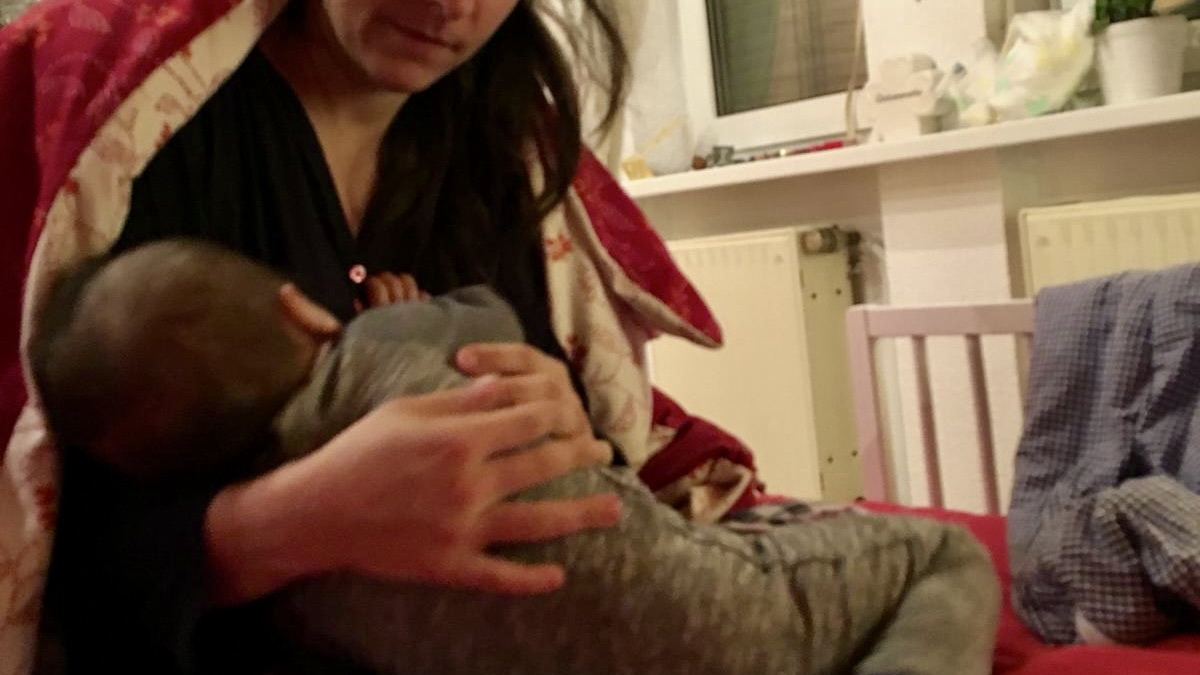
Breastfeeding can be beautiful.
It can also be exhausting, overwhelming, physically demanding, and sometimes just plain hard.
And I’m not saying that as someone who has only read about breastfeeding.
I’m a mom of two boys, and I breastfed both of them for a long time. So, while I’m definitely not a medical professional or lactation consultant, I have a fair amount of real-life breastfeeding experience under my belt. 😉
My first son was such a mama’s boy. He loved being close to me and would cluster breastfeed almost every evening. Some evenings it felt like he had decided that nursing was simply his new full-time hobby.
Then came my second son.
He was a big baby, already had his first two teeth at four months old, and — unsurprisingly — needed a whole lot of milk. So I got plenty of experience with long breastfeeding sessions, constant hunger, figuring out how to stay hydrated, finding something to eat with one hand, and trying to take care of myself while taking care of a baby.
So yes, I’m kind of an expert. 😉
Not the medical kind.
The I’ve-been-there, I’ve-nursed-two-boys-for-a-very-long-time, I-know-what-it’s-like-to-be-stuck-under-a-sleeping-baby-and-desperately-need-a-snack kind.
And that’s the perspective I want to bring to this post.
Because when we talk about breastfeeding, we often focus almost entirely on the baby.
Is the baby gaining enough weight?
Is the baby nursing often enough?
Am I making enough milk?
Is the latch right?
But there’s another person involved in this breastfeeding relationship.
Mom.
And her physical and mental health matter, too.
There are the middle-of-the-night feedings. The constant touching. The hunger and thirst. The pressure to make enough milk. The uncertainty about whether your baby is getting enough. The opinions from everyone around you.
And, of course, the very real fact that your body is being asked to nourish another human being while you are still recovering from having one.
So let’s talk about breastfeeding and mental health — from the perspective of someone who has spent a whole lot of time in a nursing chair.
Because taking care of your baby matters.
But taking care of you matters, too.
too.
A healthy breastfeeding relationship should include the mental and emotional well-being of the mother — not just the nutritional needs of the baby.
Breastfeeding and mental health can be complicated, and struggling doesn’t mean you’re doing anything wrong. If you’re finding yourself anxious, persistently sad, overwhelmed, angry, disconnected, or unlike yourself, it’s worth talking to a healthcare professional. Postpartum depression and anxiety are common and treatable, and breastfeeding does not mean you have to choose between getting help and feeding your baby. (CDC)
Breastfeeding Doesn’t Have to Be Perfect
There is so much pressure surrounding breastfeeding.
How often should the baby eat?
How long should each feeding take?
Am I making enough milk?
Should I pump?
Should I freeze a stash?
Should I breastfeed for six months? A year? Two years?
And somehow, in the middle of all those questions, it can become very easy to forget the mother sitting in the nursing chair.
How are you doing?
That’s an important question, too.
The goal isn’t to create the perfect breastfeeding experience. The goal is to find a feeding approach that works for your baby and is sustainable for you.
Sometimes that means getting help with a latch.
Sometimes it means working with a lactation consultant.
Sometimes it means supplementing.
Sometimes it means pumping.
Sometimes it means changing your plans entirely.
And sometimes breastfeeding is going wonderfully, but you’re still struggling emotionally for reasons that have nothing to do with feeding.
There is no failure in any of that.
Your Mental Health Deserves a Place at the Feeding
After breastfeeding two very different babies, one thing I know for sure is that there isn’t one universal breastfeeding experience.
One baby may want to nurse constantly.
Another may seem endlessly hungry.
One may sleep while nursing.
Another may wake up the second you even think about putting him down.
And what works for one mom may be completely different from what works for another.
That’s why I don’t think breastfeeding should come with a giant list of rules that leaves moms feeling like they’re constantly getting something wrong.
We need practical information, yes.
But we also need grace.
You deserve to eat.
You deserve to drink.
You deserve to rest.
You deserve support.
And you deserve to care about how you are doing—not just how your baby is doing.
Because a breastfeeding mom isn’t simply the person holding the baby.
She’s a person who needs caring for, too.
You’re often sitting still several times a day, sometimes for long stretches. You may be touched constantly. You may have very little time alone. And when you’re exhausted, even a small problem can feel enormous.
It’s easy to start thinking:
I should be enjoying this more.
Other moms seem to handle it better.
Why am I so overwhelmed?
I can’t possibly do this for another six months.
Those thoughts don’t make you a bad mom.
They make you a mom who may need some support.
And if you are experiencing persistent sadness, anxiety, loss of interest in things you normally enjoy, intense irritability, feelings of worthlessness, difficulty functioning, or feeling disconnected from your baby, please talk with your doctor, midwife, therapist, or another qualified healthcare professional. Postpartum depression is more intense and longer-lasting than the short-lived “baby blues,” and professional treatment can help. (CDC)
Don’t Ignore Anxiety Because You’re “Just Tired”
Sleep deprivation can make everything harder.
But not every difficult emotion is simply because you haven’t slept enough.
If you constantly feel panicked, overwhelmed by intrusive worries, unable to relax, or afraid something terrible is going to happen, that’s worth discussing with someone.
Postpartum anxiety can happen alongside depression, but it can also occur on its own.
You don’t have to wait until things become unbearable before asking for help.
In fact, asking for help early is one of the sanest things you can do.
And Yes, You Can Breastfeed While Getting Treatment
One of the fears some breastfeeding moms have is that seeking help will automatically mean stopping breastfeeding.
It doesn’t.
Mothers experiencing postpartum depression can usually continue breastfeeding, and treatment options can include therapy and medication. Many medications can be used during breastfeeding, but medication choices should always be discussed with your healthcare provider so that your individual situation, the medication, and breastfeeding are all considered together. (CDC)
So please don’t avoid asking for help because you assume you will be told to stop breastfeeding.
Tell your doctor that you’re breastfeeding.
Then let the two of you work through your options together.
What You Eat Matters, Too
When you’re breastfeeding, it’s remarkably easy to realize at 3 p.m. that you’ve had coffee, half a piece of toast, and approximately three bites of your toddler’s leftover lunch.
We’ve all been there.
But your body needs regular nourishment.
Breastfeeding mothers generally need additional calories compared with their pre-pregnancy needs, and certain nutrient needs increase during lactation, including iodine and choline. A varied diet can help provide the nutrients your body needs. (CDC)
This doesn’t mean you need a complicated breastfeeding meal plan.
Think simple, nourishing, and easy to grab.
Easy foods to keep around while breastfeeding
- Greek yogurt
- Eggs
- Oatmeal with nuts and fruit
- Whole-grain toast with nut butter
- Cheese and crackers
- Hummus and vegetables
- Fruit
- Avocado
- Smoothies
- Beans and lentils
- Chicken or other protein
- Salmon or other lower-mercury fish
- Potatoes or sweet potatoes
- Soups and stews
- Nuts and seeds
The goal isn’t to eat “perfectly.”
It’s to eat regularly enough that you’re not running on fumes.
And if you can put something within arm’s reach of your nursing spot, even better.
What to Eat and Drink for Electrolytes While Breastfeeding
Let’s talk about electrolytes, because this comes up a lot with breastfeeding.
First, you don’t necessarily need a special electrolyte drink every time you nurse.
For most healthy breastfeeding mothers, regular fluids and a balanced diet are enough to support hydration. Water is an important part of your daily fluid intake, and foods with high water content contribute to hydration, too. (CDC)
But if you’re feeling especially depleted, sweating a lot, sick, or simply struggling to keep up with fluids, foods and drinks containing electrolytes can be useful.
Good electrolyte-rich foods
Potassium:
- Bananas
- Potatoes
- Sweet potatoes
- Avocado
- Beans
- Yogurt
- Spinach and other leafy greens
Calcium:
- Milk
- Yogurt
- Cheese
- Calcium-fortified milk alternatives
- Some leafy greens
Magnesium:
- Nuts
- Seeds
- Beans
- Whole grains
- Leafy greens
Sodium:
- Soups and broths
- Cheese
- Salted nuts
- Olives
- Other naturally or lightly salted foods
You don’t need to eat these foods separately. A simple meal like a baked potato with beans and cheese, for example, gives you several useful nutrients and electrolytes at once.
What about electrolyte drinks?
An electrolyte drink can be convenient, particularly if you’re dehydrated from illness, vomiting, diarrhea, heavy sweating, or another situation where you’re losing more fluids and electrolytes than usual.
For everyday hydration, though, you don’t necessarily need a sports drink.
You can also get fluids from:
- Water
- Milk
- Unsweetened fortified milk alternatives
- Soups and broths
- Sparkling water
- Smoothies
- Water-rich fruits and vegetables
The Office on Women’s Health also suggests drinking a glass of water or another beverage when you breastfeed as a practical way to remember to drink. (Office on Women’s Health)
One important reminder: electrolytes can support hydration, but they aren’t a treatment for postpartum depression or anxiety. If you’re struggling mentally or emotionally, you deserve actual support for that—not just another water bottle.
Keep a Water Bottle Where You Nurse
This is one of those very simple things that can make a surprisingly big difference.
Keep a water bottle next to your favorite nursing spot.
When you sit down to feed the baby, drink.
You don’t have to obsess over hitting a certain number of ounces. Your hydration needs vary, and thirst is a useful signal.
You can also keep a small basket nearby with:
- Water
- Easy snacks
- Lip balm
- Burp cloths
- Nursing pads
- Headphones (wireless!)
- Your phone or a book
- Anything else you regularly reach for
Because if you’re trapped under a sleeping baby, getting up for water can feel like an expedition.
A few small comforts can make a surprisingly big difference, especially during those long nursing sessions. I put together an Amazon list of some practical nursing essentials you might want to keep nearby.
Give Yourself Permission to Make Breastfeeding Easier
This might be one of the most important pieces of advice I can give you:
You are allowed to make things easier.
Use the nursing pillow.
Buy the snacks.
Keep the water bottle beside you.
Ask someone else to cook dinner.
Let the laundry wait.
Feed the baby while watching your favorite show.
Ask your partner to bring you food.
Get breastfeeding support when something hurts.
And if breastfeeding is taking such a toll on your mental health that you are struggling to function, talk with your healthcare provider about your options.
Your baby needs a mother who is cared for, too.
You Don’t Have to Do This Alone
There is a particular kind of loneliness that can come with breastfeeding.
You can spend hours every day physically connected to your baby and still feel completely alone.
That’s why support matters.
Tell someone how you’re actually doing.
Not the “We’re tired but doing great!” version.
The real version.
“I’m having a hard time.”
“I’m anxious all the time.”
“I’m crying more than I expected.”
“I don’t feel like myself.”
“I need someone to help me.”
Those sentences are not signs of failure.
They’re invitations for someone to step in.
And sometimes what you need most isn’t advice.
It’s someone to hold the baby while you take a shower.
Someone to make you lunch.
Someone to sit beside you while you feed.
Someone to remind you that you’re doing a good job.
A Note About the Pressure to Keep Going
Breastfeeding recommendations are useful. But recommendations aren’t a measurement of your worth as a mother.
If breastfeeding is going well and you love it, wonderful.
If it’s difficult but you want to continue, get support.
If you’re somewhere in the middle, that’s okay, too.
And if you ultimately decide that breastfeeding isn’t right for you or your circumstances, you are still a good mom.
Your baby’s feeding method doesn’t determine how much you love your child.
Your mental health matters.
Your physical health matters.
Your ability to function matters.
And your experience of motherhood matters.
When to Reach Out for Help
Please talk to your healthcare provider if you’re experiencing ongoing symptoms of depression or anxiety, especially if they are interfering with your daily life or your ability to care for yourself or your baby.
And if you are having thoughts of hurting yourself or your baby, experiencing severe confusion, hallucinations, or feeling detached from reality, seek urgent medical help immediately. Postpartum psychosis is a medical emergency and requires immediate treatment. (ACOG)
You don’t need to figure it out alone.
Breastfeeding and Mental Health: Take Care of the Mom, Too
I think sometimes motherhood teaches us to look at ourselves last.
Baby is fed.
Baby is clean.
Baby is sleeping.
Baby has everything they need.
And then there’s Mom, sitting on the edge of the bed, realizing she hasn’t eaten lunch and her water bottle has been empty since breakfast.
Let’s do things a little differently.
Let’s remember the mom.
Feed yourself.
Drink something.
Get outside when you can.
Rest when someone gives you the opportunity.
Accept help.
Talk to someone when you’re struggling.
And let go of the idea that being a good mother means being endlessly available, endlessly patient, and endlessly capable.
A sane motherhood isn’t a perfect motherhood.
It’s one where we recognize that caring for ourselves is part of caring for our families.
And sometimes the most loving thing you can do for your baby is make sure Mom is cared for, too.

